

From Root to Frame
How an Old Oak Tree Changed the Way I Work

SPECIAL EDITION — A Reframed Mind Deep Cut
Some stories take time to reveal what they’re really about. This one began with an oak tree in my front yard—sturdy, weathered, and full of quiet strength. When it came down, I thought I was losing a piece of my home. In reality, I was being handed one of the greatest lessons I’ve ever learned about work, craftsmanship, and transformation.
This story was featured in Picture Framing Magazine this month, and I’m sharing it here for those who’ve been following along since the beginning. It’s a glimpse into how Masterpiece and The Reframed Mind are connected at the roots.
The Fall of a Giant
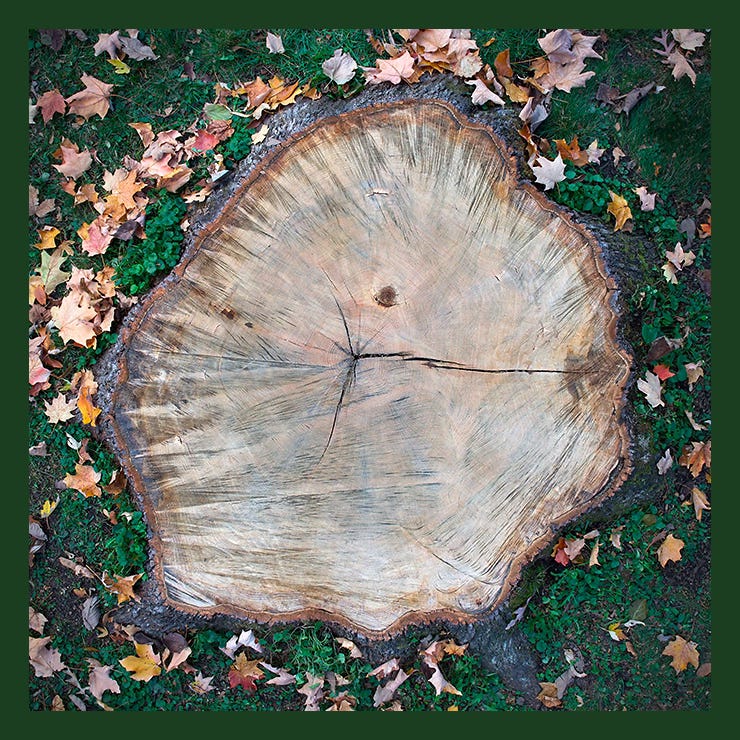
In the front yard of my home once stood a towering white oak tree—sturdy, weathered, and full of quiet strength. Estimated to be 130 years old and nearly 3.3 feet in diameter at the base, it was the oldest and largest tree on our property. My kids played around the trunk. Squirrels danced through its limbs. It shaded our house, stood tall through decades of Midwestern storms, and silently overlooked the changing rhythms of family life. To me, it was more than a tree. It was part of the soul of our home.
But nature has its own cycles. After being struck by lightning and developing a noticeable lean toward the house, the tree became a safety concern. The decision to have it taken down wasn’t made lightly. I remember standing outside the morning the removal crew arrived, feeling a lump in my throat. It was hard to witness as our family sat on the front porch and watched from a distance. We were saying goodbye to a living monument.
And yet, as we often find in life and art, endings become new beginnings.
A New Vision Emerges
In the days leading up to its removal, my wife and I asked a simple but powerful question: Could the oak live on in another way? That question sparked a vision that would eventually change the way I think about my work, our business, and the materials I handle every day.
Instead of having the wood hauled away, we decided to repurpose the tree into custom picture frame moulding. As the owner of Masterpiece Framing + Imaging, my team and I work with wood every day. But this was different. This wood came from a place I loved. It had stood for generations. Now, it would frame the stories of others. It felt poetic—like our tree wasn’t ending, it was evolving.
From Tree to Team Effort
This vision was far bigger than me alone, and it required the skill and care of several key experts who understood and appreciated its meaning.
Abbot Tree Care removed the oak with thoughtfulness and precision, cutting the trunk and branches into manageable sections without treating it like debris. From there, Garrett Magnusson of Raw Heartwood in West Chicago, Illinois milled the tree and began the drying process—an important step that would take nearly a year to properly cure the material and preserve its integrity.
Then came shaping the final frame profile. For that, we turned to Precision Moulding, a local company with a surprising twist of personal history. The since deceased founder, David Klitzky, also owned The Great Frame Up retail chain. My very first job in high school was at a Great Frame Up store. Unknowingly, I had brought the story full circle, back to the roots of my own career.


Throughout the journey, I kept our team at Masterpiece updated as each stage unfolded. From the initial removal to the drying timeline and eventual milling, we’d talk about the tree and what it would become. When the finished length moulding finally arrived at our shop, it felt like the baton had been handed off. The race was ours now, and all hands were on deck. There was a quiet sense of reverence in the shop, and then a familiar rhythm took over.
This is what we do every day. It’s where we shine.
We cut length moulding into four rails, and join the corners with care and precision. We turn raw material into meaningful frames. In that moment, the past met the present, and our team stepped into the story fully aligned and engaged.
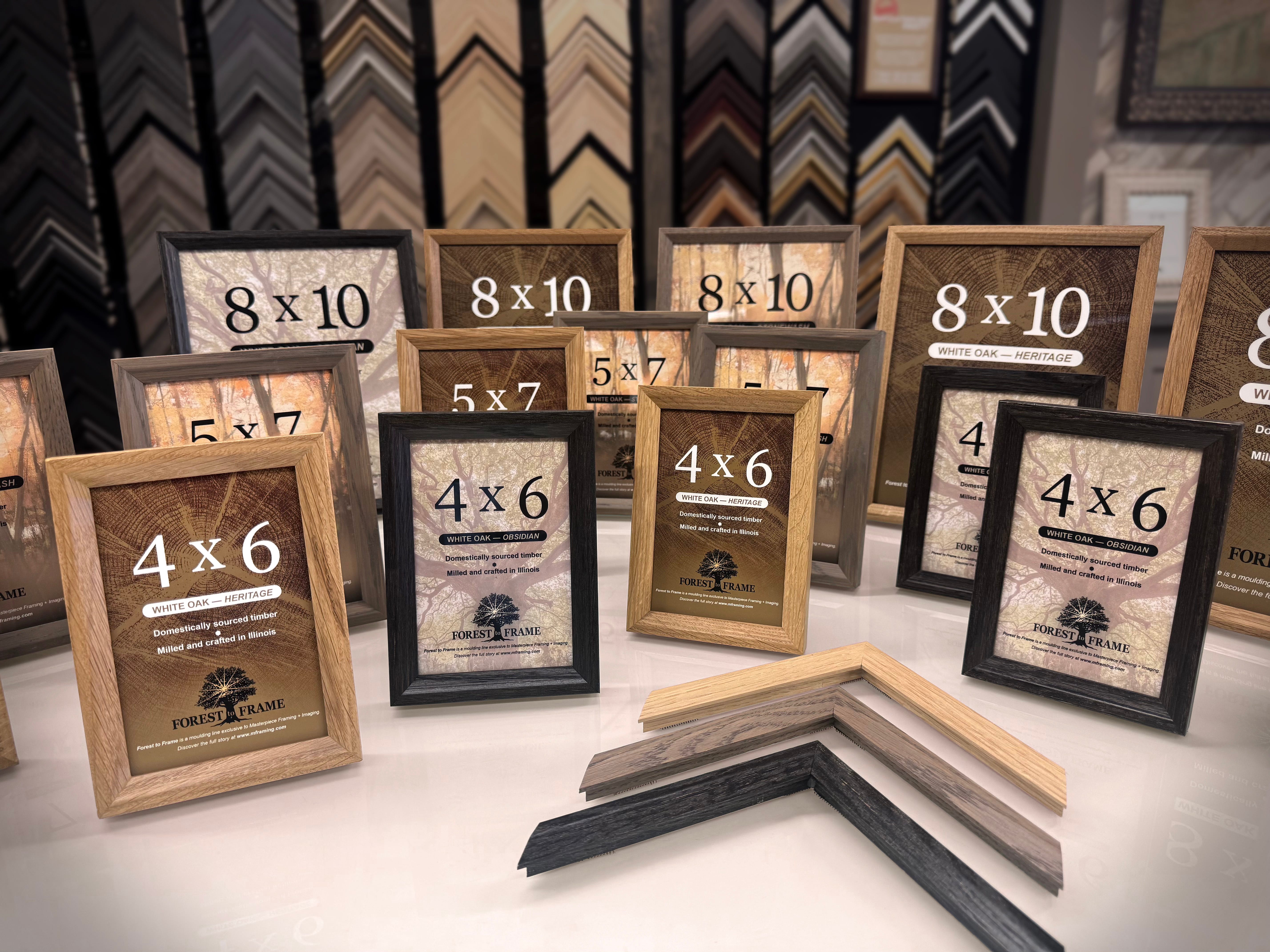
Together, we developed a custom line of moulding that showcases the character of the wood—its knots, rays, and grain. The result? A collection of handcrafted frames made from the tree that once stood in my front yard. Each one, in a way, is a tribute to transformation.
Capturing the Journey
One of the most rewarding parts of this experience was documenting the full transformation from forest to frame.
We partnered with Ivor Andrew, a local marketing agency, to create a short film capturing each stage of the journey. From soaring drone footage of the tree’s canopy to slow-motion shots of the boards being milled and finished, the video tells a story we’re proud to share. A QR code at the end of this article links to that video, inviting you to see and appreciate the process for yourself.
In our retail stores, the video now plays on framed screens, allowing customers to connect emotionally with the material. Online, it lives on our website and YouTube page, reinforcing what makes this line of frames and our philosophy unique—authentic, local and story-driven.
Forest to Frame
We’ve named the collection Forest to Frame, and the name speaks for itself. It’s a hat tip to sustainability and legacy. Every frame tells a story—from its literal roots in the soil to the walls it will eventually adorn.
Customers can choose from ready-made photo frames or have custom sizes cut to fit their artwork. Each frame comes with a card explaining its origin as a fragment of the larger narrative. Similar to the connection of a leaf to the entire tree.
But we’re not stopping there. We’re exploring ways to expand the collection using responsibly sourced trees from across the Chicagoland area. The goal is to use fallen or reclaimed wood that might otherwise go to waste. It’s an opportunity to create meaningful alternatives to imported moulding while supporting local businesses and craftspeople. This vision will also contribute to our long-term sustainability as a frameshop, and position Masterpiece for future success.
A New Understanding of Wood
Repurposing this oak tree has deepened my relationship with wood, shining light on a whole new perspective. I now see its potential in ways I hadn’t before—how plain sawn boards reveal sweeping, cathedral-like patterns; how quarter sawn cuts showcase a tight, stable grain with rich flecking; how rift sawn material provides clean, modern lines. Each wood type has its own flavor and purpose.
This understanding has made me a more intentional designer. When I recommend a frame to a customer now, I’m not just thinking about style—I’m thinking about story, symbolism, and source.
It’s also given me a renewed appreciation for our vendors and the artisans who mill, shape, finish, and handle these materials. There’s real art behind straight-length moulding that requires patience and precision.
Beyond the Frame
The sheer volume of wood we salvaged has also been astonishing and more than anticipated. I’ve since used it to build a handrail for our basement staircase, a custom desk, and an entire wall of cabinets for our home office. There’s something deeply grounding and immensely satisfying about living with the materials you helped preserve. It creates a continuity between past and present, between nature and craft.
I also saved a three-inch thick cross-section “cookie” cut from the base of the stump that I plan to preserve and coat with epoxy. I haven’t decided yet where it will live, but wherever it ends up, it will be a symbol. A medallion to continually remind me of what once stood, of what was transformed, and of what still remains.
Each piece is a continuation of the story—a conversation between nature, memory, and craft. The story isn’t over. It never is. We still have ten slabs of white oak from the tree, patiently waiting to be shaped into future frames. That means more opportunities to create, to share, and to connect.
This journey was deeply personal, but it was also shared. My team walked it with me. They listened, offered insight, and waited patiently as the oak passed through each stage of its transformation. When the finished material finally reached our shop, they picked up where the tree crew and millworkers left off. With steady hands and a craftsman’s mindset, they help carry the story forward one frame at a time.
Remembering Our Roots
At its core, this project reminded me to value where things come from—not just the materials we work with, but the ideas, people, and principles that guide us.
It reminded me to honor the mentors, colleagues, and customers who have helped shape my own journey. To respect the community that has supported our shops in Bloomingdale and Evanston. To acknowledge the craftsmen, staff members and vendors whose labor makes this art form possible. Finally, to thank the generations before us who planted the seeds—literally and figuratively—that we now build upon.
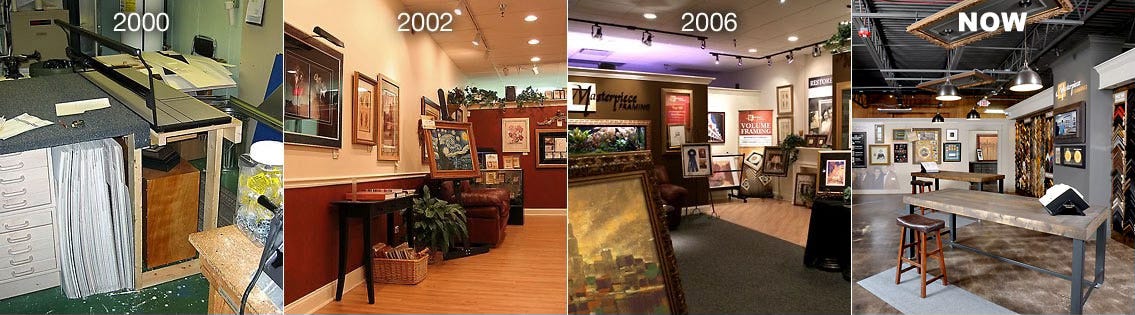
This philosophy is woven into everything we do at Masterpiece. Just as a frame supports and elevates the art it holds, we aim to frame our clients’ work with meaning, excellence, and gratitude. We know that our roots deepen as we stay committed to positive growth while serving our customers and giving back.
Our work is often quiet, but the meaning behind it is loud. The story of the white oak tree will echo through our shop for years to come—rooted in memory, framed in meaning.
In the print edition of Picture Framing Magazine, a QR code links to a short film capturing this full transformation. Here, you can simply click below to watch the video, a visual record of the journey from forest to frame.

In loving memory of Mark Grega & Dr. James Langlas, whose sparks helped ignite this journey.